Optimal Psychology Institute

A companion to the foundational text of Linda James Myers, Ph.D.

Go back and fetch what was always yours.

The Understanding an Afrocentric World View Reflective Journal walks with you through Dr. Linda James Myers' introduction to Optimal Psychology, one chapter at a time. Nine chapters of quotes, questions, and quiet space to write what the book stirs in you.

Got yours? Tell us

Paperback · Written to be read alongside the original book

The long-awaited companion

Finally, a sacred space to move through Understanding an Afrocentric World View, one chapter at a time.

  1. Read a chapter of Understanding an Afrocentric World View by Linda James Myers, Ph.D.

  2. Open the matching chapter of the journal and sit with the quotes that stood out.

  3. Write what rises. Return to the pages as your understanding grows.

Where are you starting from?

The journal does not assume any prior study. People come to it from many places.

I know this work.

You may have studied Optimal Psychology, taught the text, or practiced Belief Systems Analysis. The journal gives you, and the people you walk with, a structured way to take the work inward, chapter by chapter.

For educators and practitioners

I'm studying psychology and can't find myself in it.

Plenty of students move through a psychology degree without hearing that Black and African psychology is a field with its own elders, scholarship, and history. This book is one of its foundations. The journal helps you read it slowly and test it against your own life.

About the original text

I'm looking for a peace that holds.

If you've gathered insight from many voices and still feel unsettled, this is a way to sit with a root source and listen for what you already know. Every question in the journal is yours to answer, in your own words.

See what's inside

Inside the journal

Embody the work with intention

Each chapter opens with noteworthy quotes and a page for what stood out to you. Then come reflection questions through four lenses, guided exercises where the reading asks you to slow down, and a closing Checking In.

Take a look inside
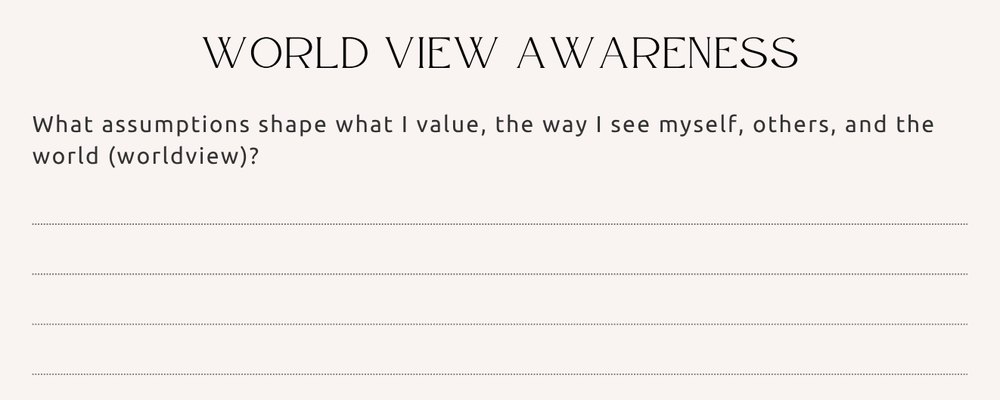
Journal page, World View Awareness: What assumptions shape what I value, the way I see myself, others, and the world (worldview)?
Chapter 1 · Introduction to an Idea
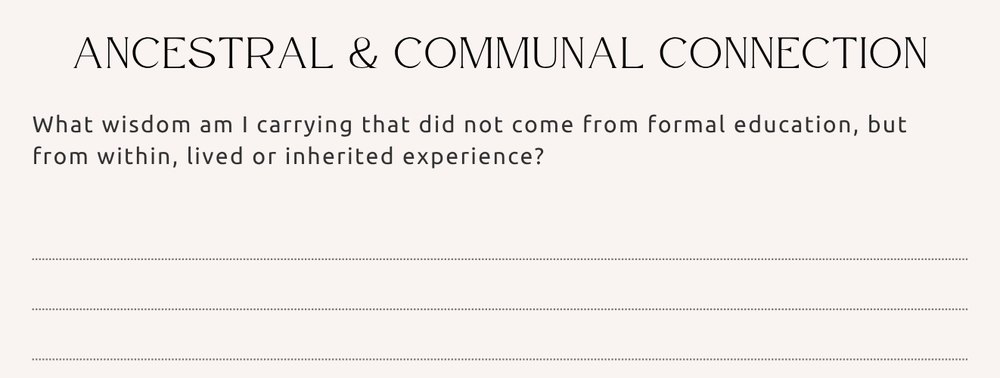
Journal page, Ancestral and Communal Connection: What wisdom am I carrying that did not come from formal education, but from within, lived or inherited experience?
Chapter 1 · Introduction to an Idea
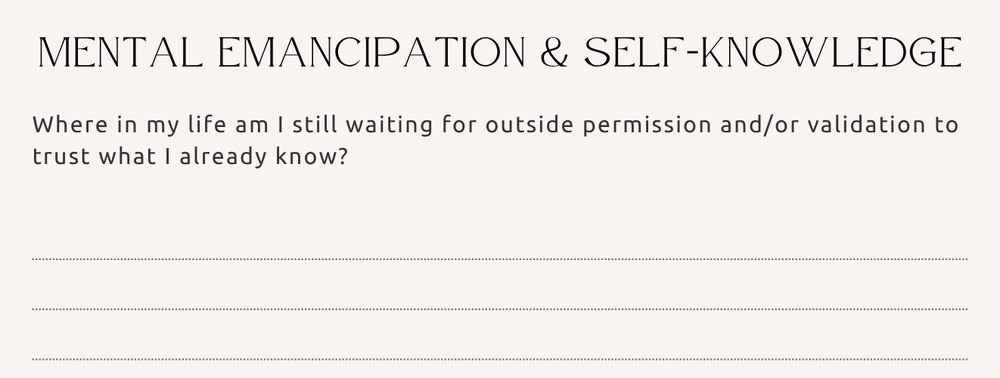
Journal page, Mental Emancipation and Self-Knowledge: Where in my life am I still waiting for outside permission and/or validation to trust what I already know?
Chapter 9 · Truth and the Psychology of Knowledge
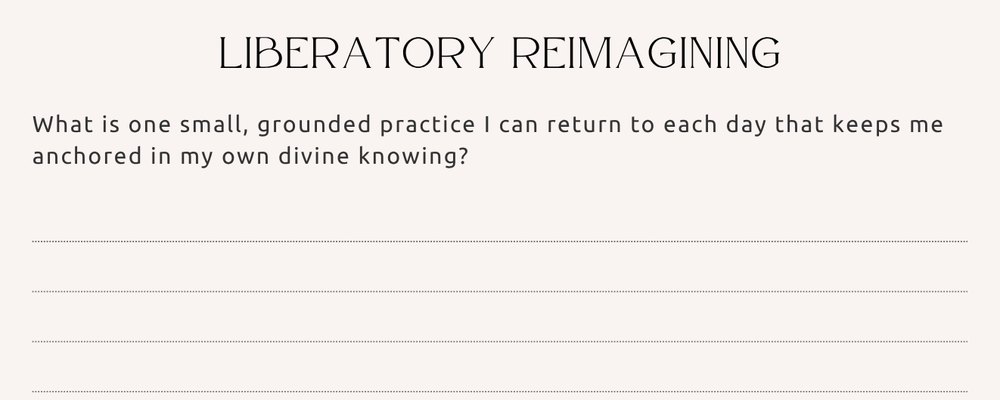
Journal page, Liberatory Reimagining: What is one small, grounded practice I can return to each day that keeps me anchored in my own divine knowing?
Chapter 9 · Truth and the Psychology of Knowledge

Part 1 · Nea Onnim

The Evolution and Expansion of Psychology

Chapters 1–3, from an introduction to the idea through Oneness: A Black Model of Psychological Functioning.

Part 2 · Bi Nka Bi

Avoiding Nihilism in Favor of Growth

Chapters 4–6, on the transpersonal paradigm, what development really means, and moral, faith, and ethical growth.

Part 3 · Tabono

Proven Through Practice

Chapters 7–9, through family, Belief Systems Analysis, and truth and the psychology of knowledge, closing with Sankofa.

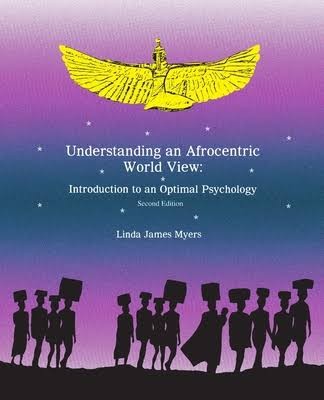
Cover of Understanding an Afrocentric World View: Introduction to an Optimal Psychology, Second Edition, by Linda James Myers

The book at the center

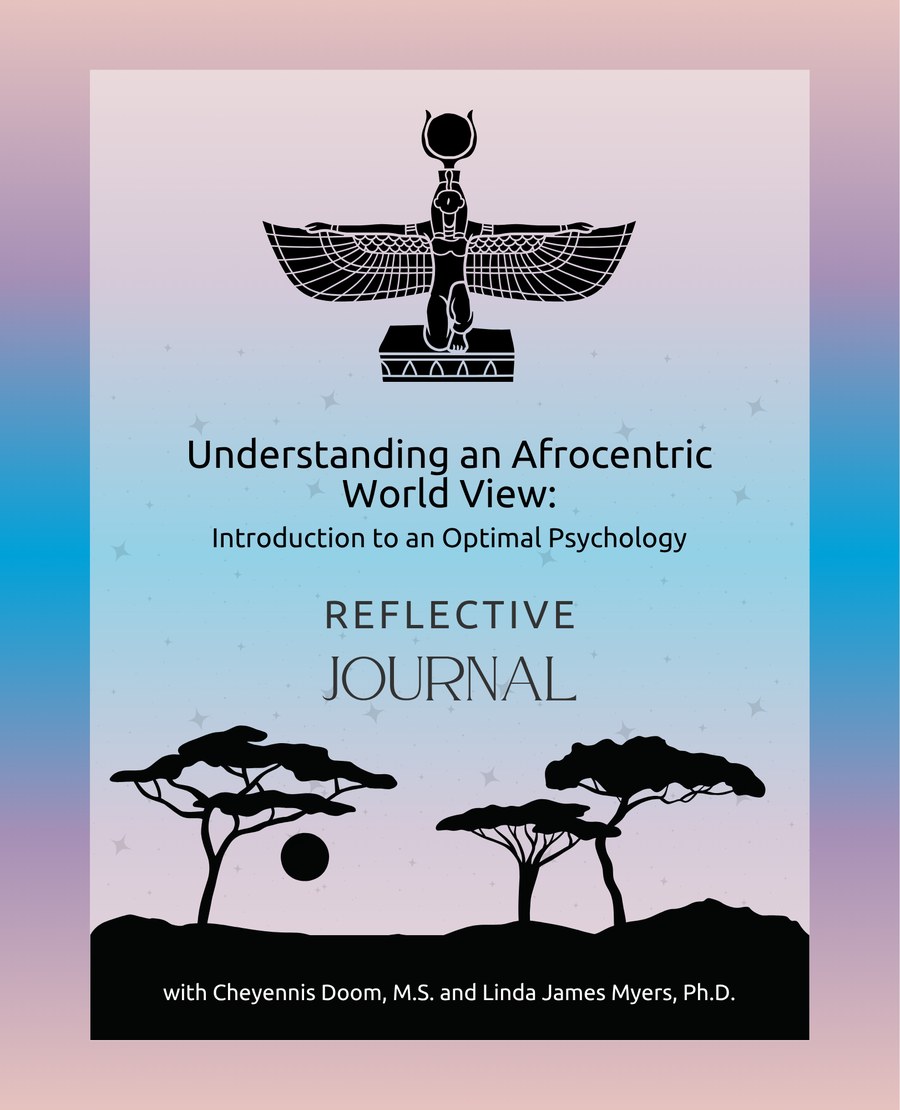
Understanding an Afrocentric World View: Introduction to an Optimal Psychology

First published in 1988, the book by Linda James Myers, Ph.D. introduced Optimal Psychology, a way of understanding human functioning drawn from the wisdom tradition of African deep thought. It examines the worldview beneath racism and other societal isms, and offers a path toward its optimal alternative. Students, scholars, and practitioners have been reading and teaching it for nearly forty years.

The journal follows the book closely without reproducing it, so you'll want your own copy.

Where to get it

The link opens the publisher's store, which is set up for classes, so it may look more like a textbook page than a bookshop. You'll find two formats:

  • Print, yours to keep and mark up.
  • Ebook, a 180-day digital rental through RedShelf or VitalSource.

Mrammuo · Paths that cross with purpose

How this journal came to be

In her first semester of graduate school, during a Safe Black Space Healing Circle, Cheyennis was introduced to Optimal Psychology and the work of Linda James Myers, Ph.D. It was the missing puzzle piece in her European-centered education. She began reading the book and writing reflection prompts as a way to take it in. After Chapter One, she stopped. The depth of the work told her she needed to be in right relationship with its source before going further.

Months later, at the 2025 Optimal Psychology Retreat in Jamaica, she found herself beside Dr. Linda James Myers at lunch. The idea surfaced again on its own. Dr. Linda James Myers listened fully, asked thoughtful questions, and named its importance. They have shaped the journal together ever since, chapter by chapter.

“Remember, Love does not lose its way home. Those led by love always end up in the right place.”

Odo Nnyew Fie Kwan, from Dr. Linda James Myers' letter in the journal
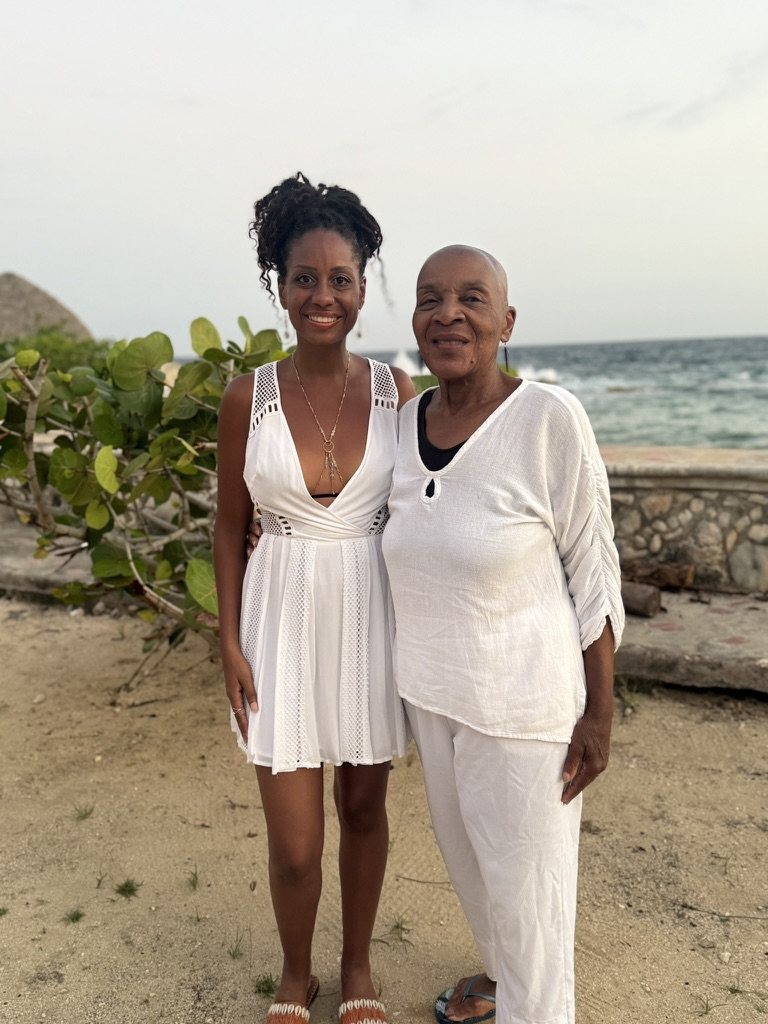
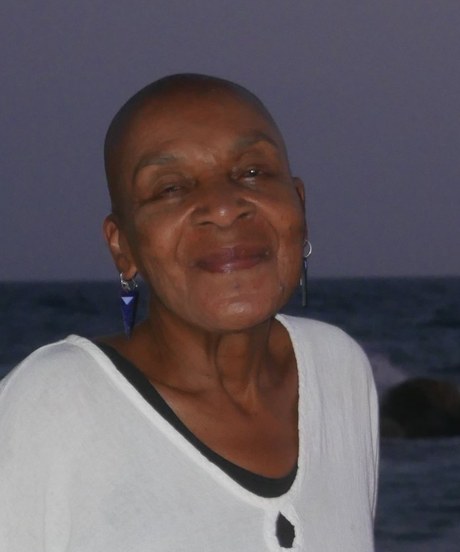
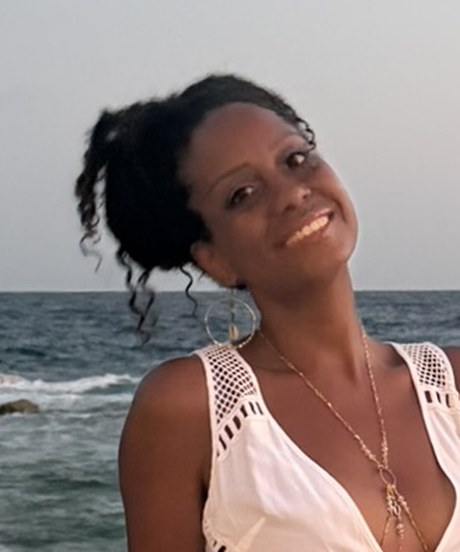
Cheyennis Doom and Linda James Myers, Ph.D., both dressed in white, standing together on a beach at dusk
Inaugural Optimal Psychology Retreat, Jamaica, May 2025
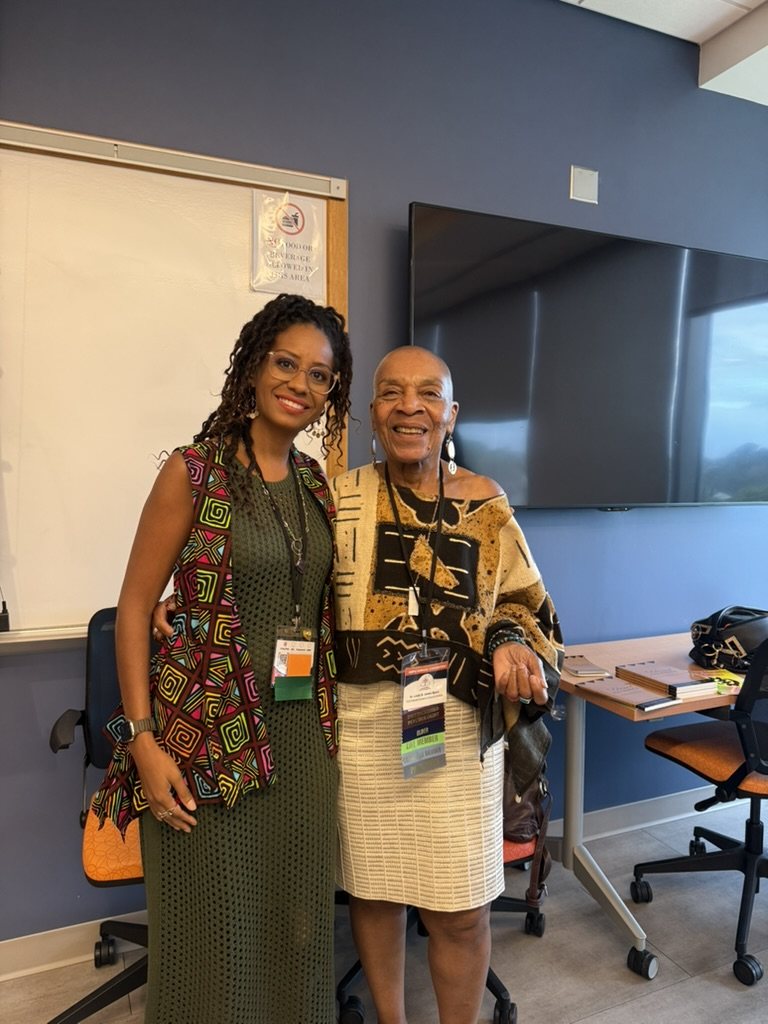
Cheyennis Doom and Linda James Myers, Ph.D. in a classroom, wearing name badges, at the ABPsi Convention
ABPsi Convention, Morgan State University, July 2026
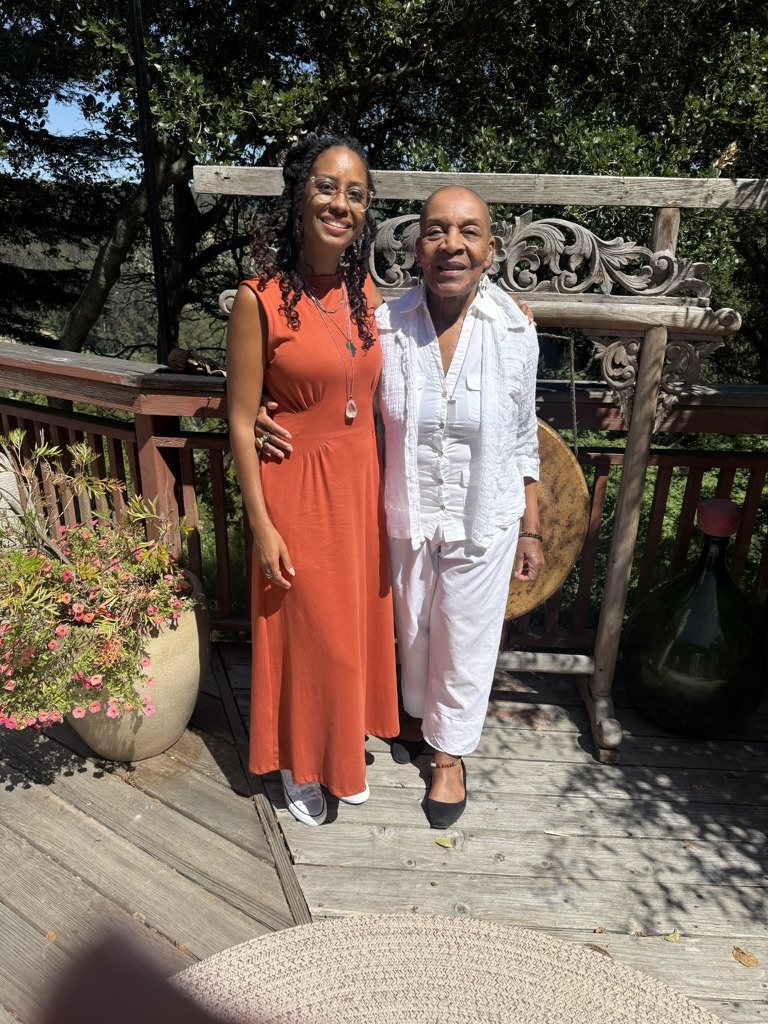
Cheyennis Doom and Linda James Myers, Ph.D. smiling together on a sunny wooden deck
2nd Optimal Psychology Retreat, Berkeley, May 2026

The authors

Linda James Myers, Ph.D.

Author of the original text

Dr. Linda James Myers is an internationally recognized scholar whose work places the wisdom tradition of African deep thought at the forefront of a paradigm shift now supported by contemporary science. Her Optimal Psychology, also called Optimal Conceptual Theory, deepens our understanding of the higher stages of human development and how to reach them. Belief Systems Analysis, her psychotherapeutic approach, along with her Optimization Process and HeartFeather Strategy, supports healing by elevating consciousness toward a more holistic, integrative mindset.

She is Academy Professor Emerita at The Ohio State University, a past president of the Association of Black Psychologists, and was named its Distinguished Psychologist.

Invite me to your circle, class or show

Cheyennis Doom, M.S.

Co-author of the Reflective Journal

Cheyennis R. Doom, M.S., is an Optimal Industrial-Organizational psychologist, and lifelong student and teacher of liberation. She earned her M.S. in Applied Psychology from USC, and holds an adjunct faculty appointment in psychology at Bethune-Cookman University. Her work centers African-centered psychology, culture, racial and occupational harm, and healing. She founded CultureROOTS, a restorative and regenerative applied psychology methodology grounded in African wisdom, and serves on the board of Safe Black Space. She co-authored Understanding an Afrocentric World View: Introduction to an Optimal Psychology: Reflective Journal and Resilience & Reinvention in a Chaotic World.

Invite me to your circle, class or show

For classrooms, practice, and circles

The journal was designed for personal use and for community engagement.

Classrooms

Pair the original text with the journal so students process the reading personally as well as academically. Faculty can request a review copy of the original book.

Practice

The journal reflects the spirit of Belief Systems Analysis. Its personal inventory and belief examination pages can support work with clients, alongside a practitioner's care.

Study circles

Read a chapter, journal on your own, then gather to share what came up. Each chapter's Checking In questions make a natural place to start the conversation.

Invite us to your class or circle

Tell us what you have in mind, and we'll shape it together. Questions first? Write to info@optimalpsychologyinstitute.org.

Gather with us

Upcoming gatherings

We share this work in person through retreats, workshops, book circles, and talks.

    Hear about the next gathering

    Host a gathering

    Invite us to your campus, practice, congregation, or community for a talk, workshop, book circle, or retreat.

    Sankofa · Go back and fetch

    Finished the journal?

    The last page invites you to tell us how the journal supported your process, how you used it, and what became clearer along the way. We read every note.

    Review it on Amazon

    Questions

    Do I need the original book?

    Yes. The journal follows the book chapter by chapter and includes selected quotes, but the full ideas live in the text by Linda James Myers, Ph.D. Get the original book in print or as an ebook.

    What is Optimal Psychology?

    Optimal Psychology, also called Optimal Conceptual Theory, is Dr. Linda James Myers' framework for understanding how the worldview we hold shapes our experience. It draws on the wisdom tradition of African deep thought, holds that all things are interrelated, and treats self-knowledge as the basis of all knowledge.

    Is this only for Black readers?

    The journal is written from a Black cultural center, and many Black readers will recognize themselves in it. Dr. Linda James Myers has long held that this way of knowing belongs to everyone; in the book she writes, “my people, of African descent, are all people.” Anyone willing to examine their worldview is welcome. See where you might be starting from.

    Can it replace therapy?

    The journal is a tool for reflection and self-examination, and it does not replace care from a therapist. Some readers use it alongside therapy or with a practitioner trained in Belief Systems Analysis.

    Can I use it in a course or group?

    Yes. It was designed for individual use and community engagement. Groups can order copies and get a quote before anything is ordered. If you're reading together, you can invite us to visit your circle or class for one Zoom conversation, or plan a full gathering such as a talk, workshop or retreat. Other questions can go to info@optimalpsychologyinstitute.org.